The Reshaping of Global Supply Chains: How Trading Companies Are Adapting to the New World Order
The era of hyperglobalised, China-centric supply chains is over. For trading companies, the transition to a multipolar sourcing world is the defining business challenge of the decade — and the companies navigating it well are building durable competitive advantages.

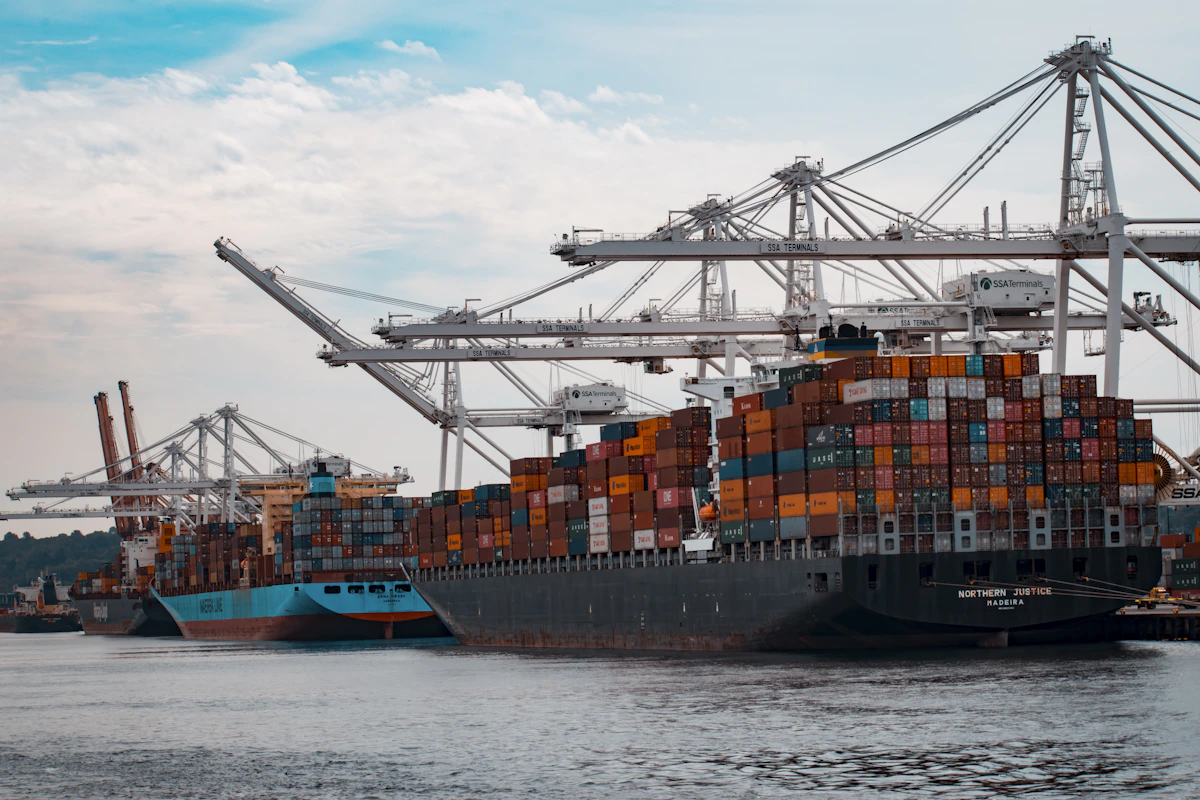
For three decades, the logic of global supply chains was elegantly simple: manufacture where costs are lowest, move goods as cheaply as possible, and hold minimal inventory. The result was an extraordinarily efficient system that delivered deflation to consumers and strong returns to shareholders, built almost entirely on Chinese manufacturing, containerised ocean freight, and the assumption of geopolitical stability.
That assumption no longer holds. The combination of the US-China trade war, the COVID-19 pandemic, the Russian invasion of Ukraine, and escalating tensions over Taiwan has exposed the fragility of hyperglobalised supply chains with brutal clarity. Trading companies that helped build those chains are now leading the effort to rebuild them on more resilient foundations.
The Scale of the Transition
The numbers are staggering. McKinsey estimates that between $4 trillion and $5 trillion of global goods trade — roughly 20% of total merchandise trade flows — is in the process of being rerouted. This is not cyclical reshuffling; it is structural redirection driven by policy mandates, corporate risk assessments, and consumer pressure for domestic sourcing in strategically important sectors.
The semiconductor industry illustrates the dynamic most clearly. A product whose supply chain was perhaps the most geographically concentrated in history — with advanced chip manufacturing almost entirely dependent on TSMC in Taiwan — is now the subject of industrial policy in the United States, Europe, Japan, South Korea, and India simultaneously. Hundreds of billions of dollars of government subsidies are being deployed to reshape production geography.
The Friend-Shoring Imperative
The Biden administration coined the term "friend-shoring" to describe the policy of routing supply chains through allied nations rather than geopolitical competitors. The concept has been enthusiastically adopted by European governments, Japan, and increasingly by multinational corporations making their own risk-adjusted sourcing decisions.
For trading companies, friend-shoring creates both disruption and opportunity. Companies that have built their entire business model around China-to-Western-market flows are under structural pressure. Those with the flexibility to develop supplier networks in alternative locations — Vietnam, India, Mexico, Poland, Turkey — are finding that their geographic adaptability commands a genuine premium in client relationships.
What Resilience Actually Costs
Supply chain resilience does not come free. Reshoring or near-shoring manufacturing adds cost — estimates range from 5% to 25% depending on the product and destination market. Maintaining larger inventory buffers ties up working capital. Qualifying new suppliers requires time and investment that displaces other priorities.
The question for corporate buyers is whether the resilience premium is worth paying. Increasingly, the answer is yes — particularly in sectors where supply disruptions carry reputational or regulatory consequences, and in strategic industries where governments are actively incentivising domestic sourcing.
For trading companies positioned as resilience partners rather than pure cost optimisers, the transition creates a compelling value proposition. The most successful operators are those helping clients understand the full cost of supply chain risk, not just the unit economics of lowest-cost sourcing.
Our editors curate the most important stories every morning. Join 50,000+ professionals who start their day with Nexwire.
No spam. Unsubscribe any time.
Sarah Mitchell at Nexwire delivers expert analysis and breaking coverage across global markets, trade intelligence, and business strategy — combining deep industry expertise with rigorous reporting standards to provide actionable intelligence for business leaders worldwide.